
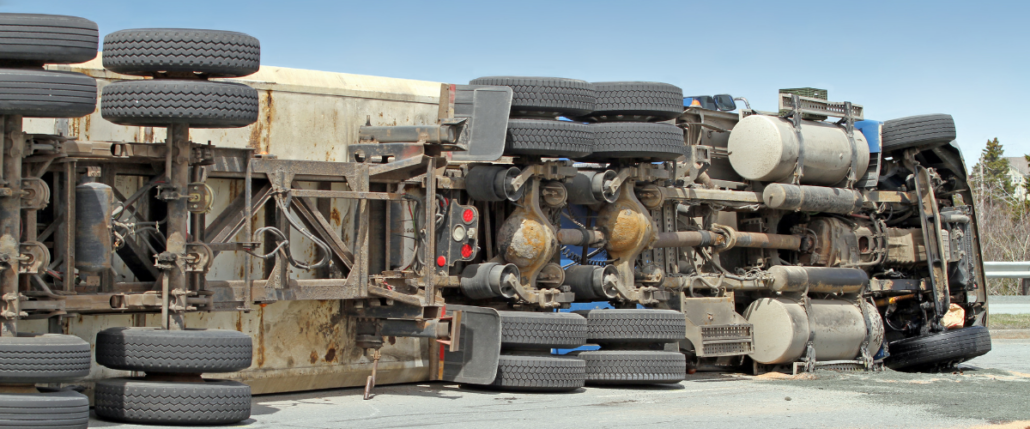
Who Can Be Sued After an 18-Wheeler Accident in Alabama?
After an 18-wheeler accident in Alabama, multiple parties can potentially be held liable, not just the truck driver. Depending on the circumstances of the crash, you may be able to sue the trucking company (motor carrier), the freight broker that arranged the load, the company that loaded the cargo, the truck or parts manufacturer, a third-party maintenance provider, and, in some cases, even a government entity responsible for the roadway. Identifying every responsible party is not just a legal strategy; it is often the only path to full compensation, because the truck driver alone rarely carries enough insurance to cover a catastrophic injury or a wrongful death.
Can You Sue the Truck Driver Personally?
Yes. The truck driver is typically the starting point in any 18-wheeler accident case. If the driver was speeding, following too closely, distracted, fatigued, impaired, or violating any traffic law at the time of the crash, they can be held personally liable for the injuries they caused.
Truck drivers operating on Alabama’s roads, including the heavily trafficked stretches of I-65 through Mobile County, U.S. Highway 98 through Daphne and Fairhope, and the Highway 59 corridor to the Gulf Coast, are required to hold a commercial driver’s license (CDL) and comply with the Federal Motor Carrier Safety Regulations (FMCSRs). Violations of these federal rules, such as exceeding Hours of Service limits or driving with a suspended CDL, can establish what Alabama courts call “negligence per se”—meaning the violation itself is treated as proof of negligence.
That said, suing the driver alone is rarely sufficient. Most individual drivers carry limited personal assets and rely on the motor carrier’s insurance policy. The real financial recovery usually comes from the trucking company and its insurer.
When Is the Trucking Company Liable?
The trucking company, or motor carrier, is the primary defendant in most 18-wheeler accident lawsuits. There are two main theories of liability against the carrier:
Vicarious Liability (Respondeat Superior)
Under this legal doctrine, an employer is responsible for the negligent acts of its employees committed within the scope of employment. If the truck driver caused the wreck while performing their job duties—hauling a load from point A to point B—the trucking company is automatically liable for the driver’s negligence. The company cannot escape this responsibility by arguing that it told the driver to be careful.
Direct Negligence by the Carrier
A separate and often more powerful claim is that the trucking company itself was negligent in how it ran its operation. These claims target the company’s own failures, independent of the driver’s conduct at the moment of the crash:
- Negligent hiring: Bringing on a driver with a history of DUI convictions, license suspensions, or safety violations documented in the FMCSA’s pre-employment screening program.
- Negligent training: Failing to properly train a driver on cargo securement, defensive driving, or the specific characteristics of the equipment they operate.
- Negligent supervision: Ignoring evidence that a driver was falsifying Hours of Service logs, using a personal cell phone while driving, or repeatedly speeding.
- Negligent maintenance: Failing to inspect, repair, or replace critical components like brakes, tires, coupling devices, and lighting systems on the schedule required by federal regulations.
- Negligent entrustment: Allowing a driver to operate a vehicle when the company knew or should have known the driver was unfit.
Evidence of these failures comes from the trucking company’s own records—driver qualification files, maintenance logs, electronic logging device (ELD) data, dispatch records, and drug and alcohol testing results. Because carriers are required by law to retain these records for specific periods, a spoliation letter sent promptly after the crash can preserve evidence that might otherwise be routinely destroyed.
Can You Sue the Freight Broker?
In many commercial trucking operations, the company that ships the goods does not deal directly with the trucking company. Instead, a freight broker acts as the intermediary—matching shippers with available carriers for a fee. The broker does not own the truck or employ the driver, which creates a layer of legal separation that brokers frequently hide behind.
But freight brokers can be held liable under certain circumstances. The most common theory is negligent selection: if the broker hired a motor carrier with a documented history of safety violations, failed inspections, or out-of-service orders—information that is publicly available on the FMCSA’s Safety and Fitness Electronic Records (SAFER) system—the broker may share responsibility for the crash. A broker that prioritizes the lowest price over the safest carrier is putting cost savings ahead of human life, and Alabama law can hold them accountable for that choice.
In some cases, brokers may also be liable under respondeat superior if they exercised enough operational control over the trucking company to create an agency relationship. This is a fact-intensive inquiry that depends on how much direction the broker gave regarding routes, schedules, and delivery requirements.
What About the Company That Loaded the Truck?
The company responsible for loading cargo onto the trailer—whether the shipper itself or a third-party loading dock—can bear liability when improper loading contributes to a crash. Common scenarios include:
- Overloading: Exceeding the truck’s gross vehicle weight rating (GVWR) or axle weight limits puts extreme stress on the braking system, tires, and suspension, and can cause a driver to lose control, particularly on the long downhill stretches and bridge approaches common along the I-10 corridor and I-65 through Mobile.
- Unbalanced or unsecured cargo: When freight shifts during transit because it was not properly distributed or restrained, the trailer’s center of gravity changes, making it susceptible to rollovers on curves and during evasive maneuvers.
- Hazardous materials violations: A shipper that fails to properly classify, package, or placard hazardous materials can be held liable when a spill, fire, or explosion results from a collision.
Under FMCSA regulations, the driver is responsible for inspecting the load before departing and during transit. But this does not relieve the shipper or loader of its independent duty to prepare and secure the cargo safely. Both parties can be held liable when an improperly loaded trailer causes or contributes to an accident.
Can a Truck or Parts Manufacturer Be Sued?
When an 18-wheeler accident is caused not by human error but by the failure of the truck itself—a brake system that malfunctions, a tire that blows out, a steering component that fractures, or an underride guard that fails to perform as designed—the manufacturer of the truck or the defective component may be liable under Alabama’s Extended Manufacturer’s Liability Doctrine (AEMLD).
These are product liability claims, and they can be brought against:
- The manufacturer of the tractor or trailer
- The manufacturer of a specific defective component (brakes, tires, coupling systems, fuel tanks, electronic stability control systems)
- Distributors and sellers in the chain of distribution
Product liability claims add significant value to a trucking case because they bring in additional insurance coverage and place blame on the entity that designed or manufactured the defective part. However, they also require technical investigation by engineers, accident reconstructionists, and other professionals who can analyze the failed component and establish the defect.
What If a Third-Party Mechanic Was Responsible?
shops and service providers. If a mechanic performed a brake repair improperly, failed to identify a worn tire during an inspection, or signed off on a vehicle that should have been taken out of service, that repair shop can be held liable for the resulting crash.
These claims often surface when the trucking company’s maintenance records show that a specific repair or inspection was performed by an outside provider shortly before the accident. The records create a direct link between the maintenance failure and the crash, and they provide a basis for holding the repair shop accountable.
Why Identifying Every Liable Party Matters Under Alabama Law
Alabama is one of a small number of states that still follows the doctrine of pure contributory negligence. Under this rule, if the injured person is found to be even one percent at fault for the accident, their claim can be completely barred. The defense team in every trucking case will look for any way to shift even a sliver of blame onto the victim.
Identifying and proving the negligence of multiple defendants is one of the most effective ways to counter this defense. When the evidence shows that the trucking company was negligent in hiring a driver with a terrible safety record, the broker selected a carrier with multiple out-of-service violations, and the shipper overloaded the trailer by 10,000 pounds, it becomes much harder for a jury to conclude that the victim’s driving played any meaningful role in the collision.
How Long Do You Have to File a Lawsuit?
Alabama’s statute of limitations for personal injury claims is two years from the date of the accident under Alabama Code § 6-2-38. Wrongful death claims must be filed within two years of the date of death under § 6-5-410(d).
These deadlines are strict, and the investigation needed to identify all liable parties, pulling FMCSA records, preserving ELD data, obtaining maintenance files, and consulting technical professionals, takes time. Waiting too long can mean the difference between a fully documented case and a missed opportunity.
Common Mistakes to Avoid After an 18-Wheeler Accident
- Giving a recorded statement to the trucking company’s insurer before consulting an attorney. These statements are used to build a contributory negligence defense against you.
- Assuming the truck driver is the only person responsible. The driver is often the least financially significant defendant in the case.
- Delaying medical treatment or failing to follow through on a treatment plan. Gaps in medical care create openings for the defense to argue your injuries are not as serious as claimed.
- Failing to preserve evidence. Photographs of the accident scene, the vehicles involved, and your injuries should be taken as soon as possible. Dashcam footage, witness contact information, and the police report should all be secured immediately.
- Waiting too long to contact an attorney. Critical evidence from the truck’s ELD, event data recorder (“black box”), and the carrier’s internal files can be lost or overwritten if a preservation demand is not sent quickly.
Talk to Our Southern Alabama 18-Wheeler Accident Lawyers
If you or a family member has been injured in an 18-wheeler accident on I-65, I-10, U.S. 98, Highway 59, or anywhere in Baldwin or Mobile County, the attorneys at Stone Crosby, P.C. can evaluate your case and identify every party that may be responsible. Contact our office today at (251) 626-6696 or reach out to us online to schedule an initial consultation.